A First-in-the-Nation Investment in Families: How the Diaper Distribution Demonstration and Research Pilot (DDDRP) Is Making a Difference in Western Pennsylvania
When people think about poverty, they often think about housing, food, or child care.
They don’t always think about diapers.
But for families with babies and young children, diapers are not a small need. They are a basic need and a significant budget item. And when families cannot afford them, the effects show up quickly in household budgets, in health outcomes, and in everyday stress.
That is why the Diaper Distribution Demonstration and Research Pilot (DDDRP) was created.
In 2024, CAAP launched a full partnership with the Western PA Diaper Bank (WPADB) to pilot a major leap in diaper distribution across western Pennsylvania. The program is funded through the Administration for Children and Families at the U.S. Department of Health and Human Services and serves families in Allegheny, Beaver, Cambria, Fayette, Greene, Indiana, Washington, and Westmoreland counties.
Now, with two full years of program data as of December 31, 2025, the pilot continues to show what is possible when strong partners come together around a clear, urgent need.

Diapers Matter More Than People Realize
For families with young children, diaper costs add up fast.
A single child may use 4,600 to 4,800 diapers from birth to potty training. Families can spend between $945 and $1,050 per year per child on diapers alone. Those costs multiply with any sensory or allergy needs. At the same time, 50% of families with young children experience challenges securing enough diapers. That pressure affects more than a monthly budget.
When families do not have enough diapers, it can create health concerns for babies and children. It can also make it harder for parents to work, attend appointments, or keep up with other responsibilities. A lack of diapers can stand in the way of stability.
The DDDRP helps meet that need directly while also connecting families to other support.

What the Program Provides
Through this pilot, each local agency can provide up to 100 diapers per child per month for participating families, along with products such as wipes.
However, the program does more than distribute diapers.
Local agencies also connect families to other services that can improve health and economic stability. That might include referrals to programs that support housing, employment, food access, or family well-being.
This is one reason the DDDRP fits so well within Community Action. It addresses an immediate need while also opening the door to broader support.

The Role of CAAP and WPADB
This pilot works because it builds on the strengths of both partners.
CAAP brings the trusted, hyper-local service network of Community Action. WPADB brings its long-standing diaper distribution expertise. Together, they create a strong system that reaches families through agencies already rooted in their communities.
CAAP coordinated the recruitment of Community Action Agencies into the diaper distribution network, bringing the number of DDDRP partner agencies to 13.
CAAP also helps administer the program by making sure agencies and WPADB receive federal updates, report activities, and receive feedback on performance.
WPADB helps keep agencies stocked and ready to distribute the growing number of diapers families need.
As Cathy Battle, Executive Director and Co-Founder of WPADB, shared:
“The Community Action Agencies have made the work we do on the Diaper Grant possible. There is no way the Diaper Bank could have continued the work we do without the inclusion of the CAAs because of how much need there is. They have allowed us to scale up and made this whole grant possible.”

The Impact So Far
In 2024 alone, the DDDRP:
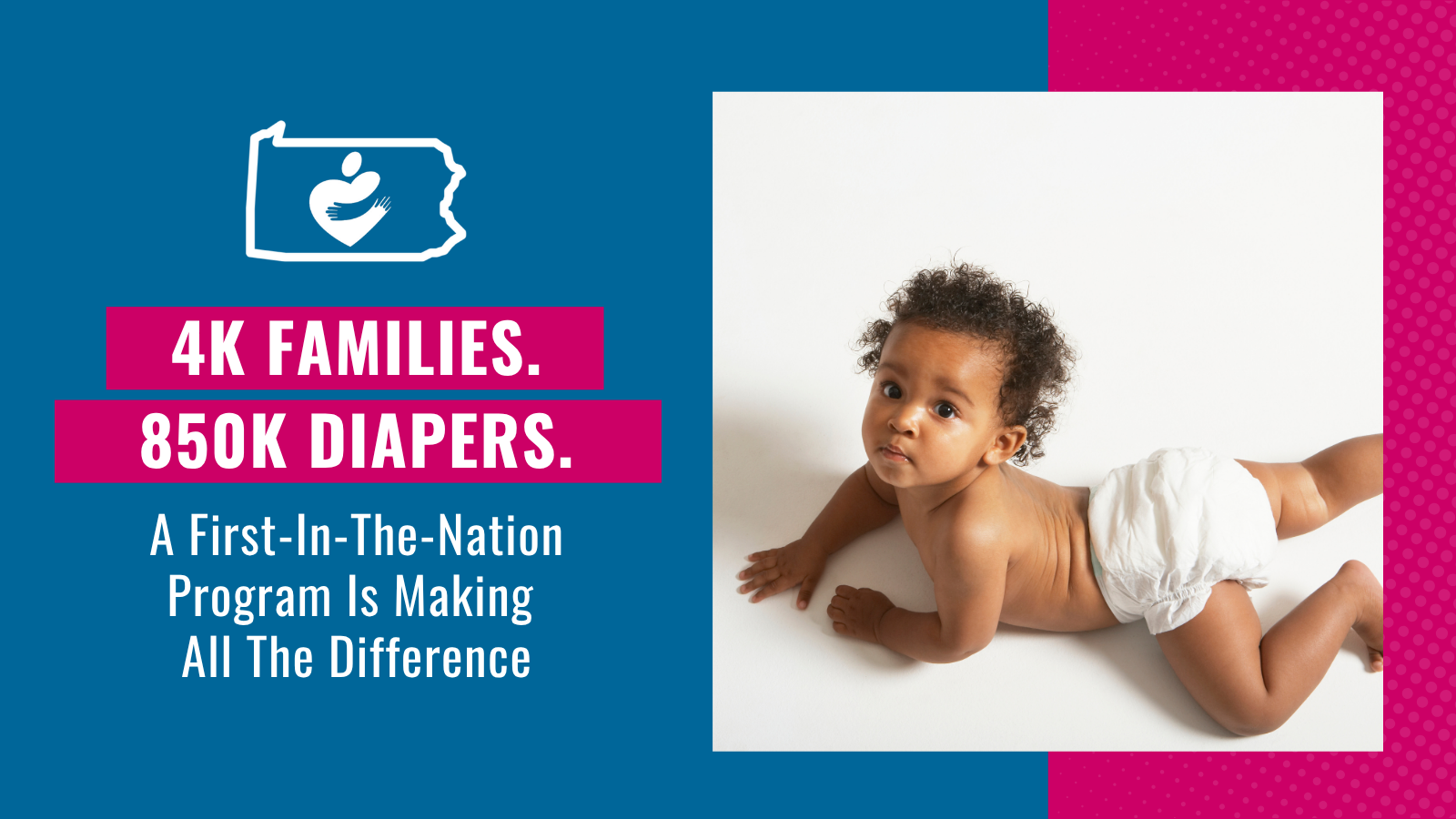
helped 3,969 families
provided 866,765 diapers
referred 3,890 families to economic and health improvement services
That level of reach is significant.
It also shows that diaper need is deeply connected to other parts of family stability. Families may come for diapers, but they often leave with stronger connections to the supports that help them move forward.
The pilot was originally set to conclude in September 2025, but its impact has been so strong that funding is now continuing at least through September 2026.
Why This Matters for Community Action
The DDDRP is the first of its kind in the nation in scope and scale.
It shows what can happen when public investment, local trust, and strong community partnerships come together around a simple but critical need. Anti-Poverty work starts with something as practical as making sure a parent has enough diapers to get through the month.
That kind of support helps kickstart economic stability, improve health outcomes, and reduce stress for families with young children.
That is exactly the kind of work Community Action was built to do.

Looking Ahead
As the program moves forward, CAAP remains proud to work alongside WPADB and local partner agencies to make sure families get the support they need.
When a family’s basic needs are met, everything else becomes a little more possible.
This is where meaningful change starts.
